

Why You Keep Checking Your Phone — Even When There’s Nothing There
Your brain isn’t distracted — it’s conditioned by unpredictability.

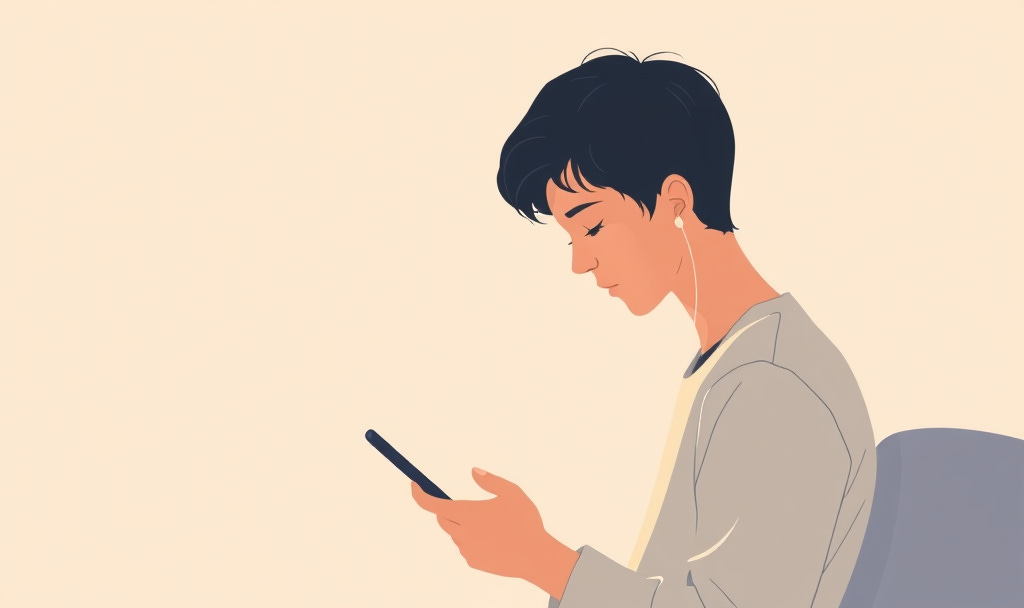
The average person checks their phone about 80–150 times a day.
Most of those checks last less than 30 seconds, and nearly half happen without any notification.
Most of the time, you unlock your phone “just to check.”
Then your fingers automatically move through different apps.
You open Instagram without thinking.
You switch between apps randomly.
Then you close your phone and get ready to start your work
But five minutes later, you pick it up again.
So why are you unlocking your phone when there’s nothing there?
The real problem is that you think it’s harmless.
But this tiny habit is quietly training your brain.
You think you lack focus, that’s why you keep checking your phone.
But it’s not a distraction. It’s conditioning.
Here’s the real question:
Who is deciding — you or your dopamine?
There’s a psychological reason behind this.
It’s called Dopamine conditioning.
Your brain releases dopamine not only when you get a reward, but also when you anticipate a possible reward.
Phones use something called a variable reward schedule.
That means:
Sometimes you get an important message.
Sometimes you get a like on your post.
Sometimes you get nothing.
The reward is unpredictable.
And unpredictability is what makes the brain hooked.
This concept comes from behavioral psychology research by B. F. Skinner, who discovered that variable rewards create the strongest habit loops.
It’s the same mechanism used in slot machines and gambling systems.
Your brain doesn’t crave the phone.
It craves the possibility that something interesting might be waiting.
That anticipation spike is dopamine.
Over time, the loop strengthens:
Cue → Check phone → Sometimes reward → Dopamine
So even when there’s nothing there, your brain says,
“Check again. Maybe this time.”
That’s why you keep checking your phone repeatedly.
The problem isn’t how long you use your phone.
The problem is how often you reach for it without thinking.
You don’t always check your phone because you need something.
You check it because your brain has learned the pattern.
A tiny moment of boredom.
A slight discomfort.
A pause between tasks.
And before you even realise it, your hand is already there.
The danger isn’t usage.
It’s automatic checking because every automatic check strengthens the loop.
And the more you repeat it, the less control you feel over it.
The One Shift That Helps
The 10-Minute Delay Rule
Whenever you feel the sudden urge to check your phone, don’t grab it immediately.
Wait 10 minutes.
If the urge is still there after 10 minutes, then check.
For example:
As soon as you wake up, instead of checking your phone instantly, wait 10 minutes.
Stretch your body.
Hydrate yourself.
Meditate for a few minutes.
Over time, those dopamine spikes reduce, and the urge becomes weaker.
Why This Works
When you feel the impulse to check your phone, it rises quickly, peaks, and then slowly fades.
But when you act on it immediately, you never allow the urge to pass on its own.
When you delay the check by 10 minutes, you weaken the conditioning.
And the moment you pause, something powerful happens:
You shift from autopilot to awareness.
Once you are aware, you are choosing — not reacting.
That’s how control slowly comes back.
So the next time you feel the urge to check your phone,
Pause.
Wait 10 minutes.
Every time you pause, you take control back.
Today, try the 10-minute rule once.
Just once.
And notice who’s really in control.
Before you scroll again, pause for a second.
What usually triggers you to check your phone boredom, stress, or just a habit?
Great article - called out 99% of people
I appreciate you writing this piece as I frustrate myself when I find y phone in my hands without even realising I’m doing it. I have no need to pick it up so many times in the day and need better habits.